Lithium helps reduce PFAS to reusable fluorine
By Prachi Patel | C&EN | January 29, 2026
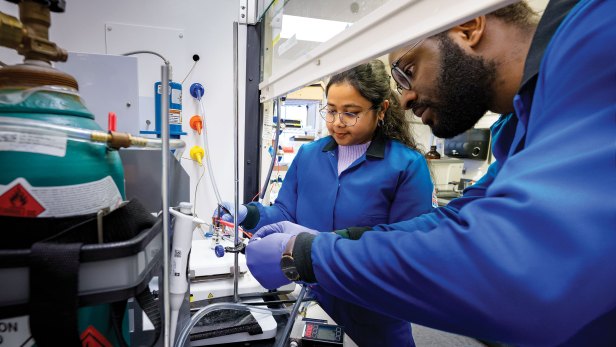
Read the full article by Prachi Patel (C&EN).
“Lithium’s high reactivity can cause trouble in batteries based on lithium-metal anodes. The metal degrades the fluorinated electrolytes used in these batteries, affecting performance.
Because these electrolytes contain fluorine, as do PFAS, the harmful per- and polyfluoroalkyl substances that persist in the environment, Chibueze Amanchukwu says he and his colleagues at the University of Chicago wondered ‘can we take that disadvantage of a lithium-metal battery and apply it to PFAS destruction?’
The researchers tested their hunch by dissolving PFAS in the electrolyte solution of a lithium-containing electrochemical cell. They found that lithium indeed helps break 95% of the strong carbon-fluorine bonds in perfluorooctanoic acid (PFOA), a common PFAS (Nat. Chem. 2026, DOI: 10.1038/s41557-025-02057-7).
Instead of chopping up PFOA into smaller PFAS with shorter carbon chains, the lithium-based method breaks it down completely to lithium fluoride. The researchers reused the fluoride to make non-PFAS compounds relevant for batteries and pharmaceuticals. The team showed that the method also works to various extents on 33 other such compounds.”…
This content provided by the PFAS Project.
Topics: